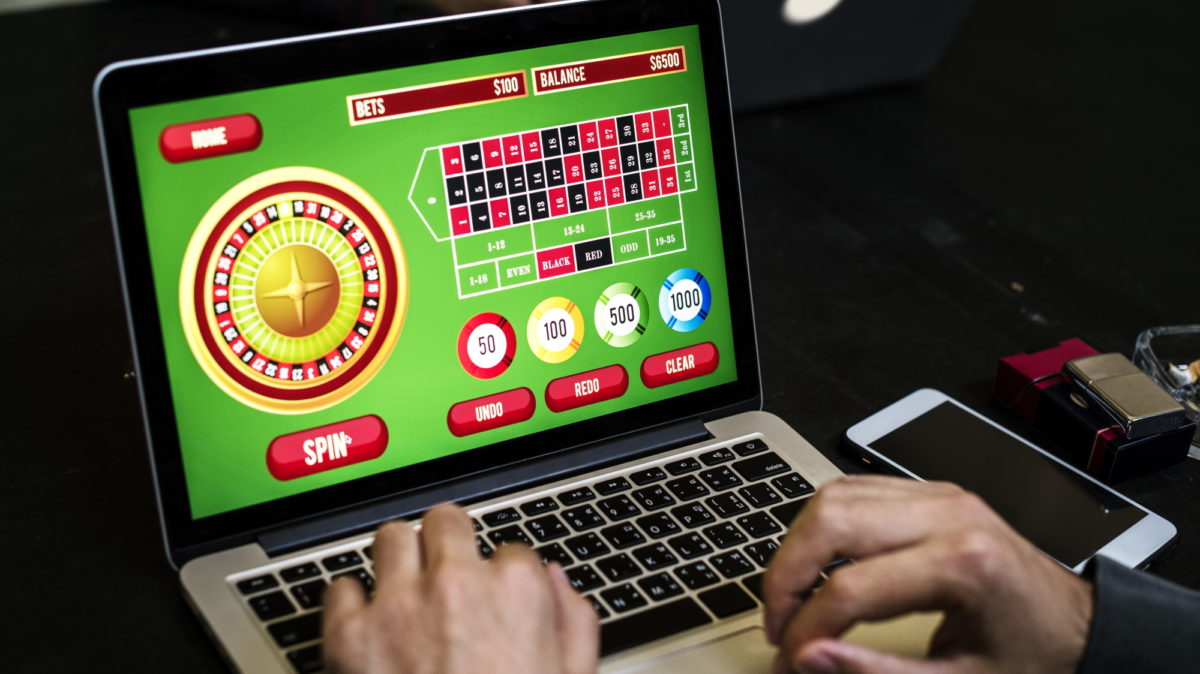
Many players come to online Velwins Casino with one urgent question: are free-to-play casino games truly worth your time, or just a polished marketing trick to push you toward a deposit? After observing thousands of player sessions, we’d say the truth is more nuanced. Free play modes—often referred to as demo or practice versions—are software tools that copy the exact math models of their real-money counterparts. The random number generators, RTP percentages, and hit frequencies remain identical. What’s missing is financial risk and, crucially, any real monetary reward. Grasping that duality is the key to leveraging these tools well. They can’t substitute for the buzz of a real win, but they’re a beneficial educational resource and a real form of entertainment, as long as you treat them with clear eyes and a particular goal.
The Structural Integrity of Free Play Slots
A stubborn myth says demo slots pay out more lavishly to entice you, but that misses how licensed casino software actually works. At Velwins Casino, the practice games come from the same top-tier developers that supply the real-money versions. Studios like NetEnt, Play’n GO, and Pragmatic Play design their titles around a set mathematical framework. The RTP value is hard-coded; the casino operator can’t tweak it when transitioning between demo mode and paid mode. If a slot lists an RTP of 96.1%, that number drives the simulation across millions of spins, whether you’re using demo credits or sterling. The variance pattern—the pattern of win occurrence and magnitude—also remains constant. So the losing runs you experience in demo mode are statistically the same as in real play, providing you with a genuinely truthful preview of a game’s temperament before you risk a penny.
But we have to separate mechanical integrity from subjective perception. With a balance of five thousand virtual credits that replenishes with one click, the sting of a losing streak disappears. That smooth environment often leads players into aggressive betting they’d never use with their own cash—maxing the bet level and seeking bonus rounds without control. The effect is a distorted sense of a slot’s risk. A game that can drain a real deposit in minutes seems like a harmless, quick thrill ride in demo mode. We always advise players to replicate their genuine budget limits during free play. If you aim to bet twenty pence per spin with real money, adjust the demo bet to twenty pence and suppress the urge to raise it. That’s the only way to obtain meaningful data on how long a session lasts.
The Mobile Experience and Technical Dependability
In the UK market, mobile compatibility isn’t a luxury—it is how the majority of players access casinos. Free-to-play games give you a no-risk way to perform a comprehensive technical audit of how a casino’s platform works on your individual device. At Velwins Casino, we’ve made significant investments in making our instant-play platform operate seamlessly across iOS and Android, but the wide diversity of handsets, screen resolutions, and browser versions means testing on your own device is invaluable. Launch a visually demanding free-play slot on your mobile browser, and you can instantly check frame rates, touch responsiveness, and battery drain. A game that lags or heats up your phone in demo mode will behave the same way in real-money mode. Detecting that before you deposit money is a notable advantage that cost-conscious players shouldn’t ignore.
Beyond raw performance, the free-play environment is the optimal place to evaluate the user interface and account management tools that underpin responsible gambling. You can discover how to set session limits, find your transaction history, and get a feel for the cashier section’s navigation logic without the interference of a varying real-money balance. We always advise new players to spend their first visit in free-play mode just tapping every menu item and personalizing their settings. That knowledge builds a cognitive map of the platform, reducing the chance of user error—like accidentally placing a max bet or failing to locate the withdrawal page—when real funds finally come into play. The technical fluency you obtain from this trial run directly leads to a more secure, more controlled gambling environment.
Table Games and the False Sense of Strategic Mastery
Free-to-play table games have a different function than demo slots, and we believe they’re the most undervalued tool in the online casino world. Unlike slots, where outcomes are completely random, blackjack, video poker, and some roulette variants have a tactical layer that directly affects the house edge. When you try a free digital blackjack hand at Velwins Casino, the software doesn’t mind that your chips are virtual; it hands out cards according to the same constant probability curve. That forms a lab environment where you can absorb basic strategy charts without the financial pressure that leads to costly mistakes. We’ve witnessed countless players memorize the right move for a soft seventeen against a dealer’s six not by looking at a chart, but by failing a dozen times in free play and watching their virtual stack shrink. That develops a visceral memory a static PDF can’t match.
Still, we have to talk about the false perception of mastery that free play can generate. Live dealer games, a huge part of the modern UK online experience, work on a different psychological plane. Playing free digital roulette feels clean and clinical: you click, the wheel spins, an RNG produces a result. That does not ready you for the social rhythm of a live dealer table, where the pace is more leisurely, visual distractions are more significant, and the pressure to place bets within a strict time window can shake even a seasoned strategist. Free play educates you the rules and the optimal math path, but it is unable to mimic the adrenaline spike of a real-money decision. We suggest using free table games to achieve unconscious competence in your strategy, then treat your first real-money live session as a distinct, new experience—not a direct extension of your practice.
The Science of No-Risk Entertainment
We frequently frame free-to-play casino games rather than a stepping stone to gambling, but as a distinct form of digital entertainment that rivals with mobile gaming apps. The modern video slot, with its detailed narratives, level-up mechanics, and cinematic cutscenes, shares more creative DNA with a fantasy mobile game than with the old mechanical one-armed bandits. Strip away the deposit and withdrawal mechanism, and you have a visually striking piece of interactive media you can appreciate purely for its artistic and audio feedback loops. At Velwins Casino, we observe a sizable group of players who treat our free play library in that manner—dipping in to try the latest Megaways mechanic or a branded sequel to a cult classic slot, with no intention of ever moving to real money. That’s a entirely valid, and we’d argue healthy, mode of engagement that the industry often misses in its rush to convert users.
The soothing objectivity of this approach derives from its transparency. There’s no hidden trap because there’s no money changing hands. The entertainment value is immediate and self-contained. But it’s important to recognize the sophisticated design psychology at work, even in demo mode. The near-miss sounds, the celebratory animations for wins that are actually smaller than the triggering stake, the relentless positive reinforcement—all designed to trigger dopamine release. Those neurological responses fire even when you know the money is fake. Knowing this lets you consciously appreciate the craftsmanship of the game design without being subconsciously manipulated. We urge players to critically examine why a particular bonus round feels exciting; that awareness is the bedrock of responsible engagement, whether you’re playing for free or for real.
Connecting the Divide Between Free Play and Real Currency
The transition from demo mode to actual cash is the most emotionally intense moment in an digital casino journey, and we feel it should be tackled with thoughtful, organized aim—not spontaneous interest. The largest misstep we see is the “hot game” fallacy: a player achieves a large demo victory in practice mode and instantly funds to capitalize on a perceived lucky streak. The RNG has no memory; that demo victory was a statistical blip with zero forecasting worth for the subsequent play. A more intelligent linking method is to establish a fixed, modest deposit amount that you’ve already mentally tagged as an leisure cost, not an capital allocation. Use free play to identify several titles whose risk level and bonus occurrence genuinely match your personality, then limit your initial cash play to those pre-vetted titles. Resist the impulse to pursue a fleeting demo win on an unknown title.
We also suggest maintaining the analytical mindset you built during demo mode into your actual-currency play. Record a simple log of your actual-currency play: note the slot, the duration, and the outcome. That record, even if anecdotal, serves as a anchoring device that counters the selective memory bias built into gambling—where large victories are clearly remembered and slow defeats are readily dismissed. By treating your initial cash attempts as a continuation of the exploration stage, just with the added variable of actual economic danger, you preserve the objective, calm perspective that characterizes a astute gambler. The fact about practice casino games is that they’re a mirror showing your own self-control. They offer the data; it’s your role to apply it intelligently when demo credits become real sterling.
Using Free Play to Analyze Bonus Terms
One of the most useful, yet infrequently talked about, uses of free play is as a forensic tool for dissecting the real-world value of casino promotions. The UK online casino landscape is packed with welcome offers, free spins bundles, and reload bonuses, all wrapped in intricate terms that can be hard to understand in the abstract. Wagering requirements, expressed as a multiplier like 35x, are simply numbers until you see them in action. We suggest a methodical approach: select a specific bonus offer available at Velwins Casino, jot down its wagering contribution weightings for different game categories, then simulate that exact scenario in free play mode. If slots contribute 100% but table games only 10%, go through a virtual bonus on a blackjack table and see how gradually the wagering bar crawls compared to a slot. That concrete demonstration is worth a thousand words of legal jargon.
Free play also enables you to stress-test the volatility limits hidden in bonus terms. Many promotions prohibit high-volatility slots or restrict the maximum bet size during wagering. By adhering to those restrictions in demo mode with a virtual balance that mirrors a typical bonus amount, you can determine whether meeting the wagering requirement is a realistic prospect or a mathematical near-impossibility. You might realize that a bonus with a attractive face value is arranged so that the maximum allowed bet size makes it practically impossible to fulfill the wagering within the time limit unless you hit an extreme statistical outlier. This kind of analysis, done in the controlled environment of free play, converts you from a passive acceptor of terms into an informed consumer who comprehends the true cost and risk built into any promotional offer before you opt in.
A Regulatory Framework Securing Free Play Users
It’s essential to understand that even if you’re playing for free, you’re on a platform that functions under the rigorous regulatory oversight of the UK Gambling Commission. This is not a lawless sandbox. The same licence conditions that control real-money play at Velwins Casino apply to demo games, especially around software fairness and transparency of terms. The games can’t be manipulated to cheat in the player’s favour to encourage deposits, nor can they be rigged against the player to force a deposit out of frustration. The technical standards demand that the game logic, including the RTP, is set by the game developer and can’t be dynamically altered by the casino operator based on whether a user is logged in, playing as a guest, or using virtual funds. That regulatory bedrock delivers a layer of consumer protection that’s often invisible but critical to the integrity of the free-play model.
The advertising standards that relate to casino marketing in the UK also influence how free play can be presented. Any claims about free-play games should not be misleading. A casino can’t , for example, advertise free play as a way to “guarantee” real-money wins or suggest that success in demo mode predicts future results. The broader responsible gambling infrastructure, encompassing self-exclusion schemes like GAMSTOP, applies too. If you’ve self-excluded from gambling, you’re normally barred from accessing even free-play demo games on a registered account, because engaging with the casino interface is seen as a potential trigger for harmful behaviour. This holistic regulatory approach implies that when you play a free game at a properly licensed UK-facing casino, you’re doing so within a framework created to prioritize fairness, transparency, and the prevention of gambling-related harm—even without a financial transaction.