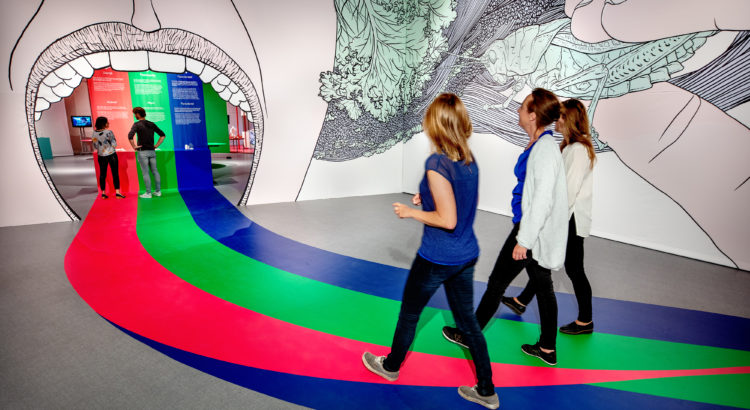
‘We shall escape the absurdity of growing a whole chicken in order to eat the breast or wing. By growing these parts separately under a suitable medium’ – Winston Churchill (1931). These words are greatly presented in the ‘Future Foods’ exhibition in the NEMO Science Museum in collaboration with Next Nature Network. This exhibition shows […]
Category: Blog
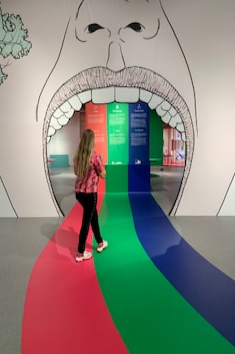
Future food: What is on our plates in 2050?
How can we protect the earth from pollution and unnecessary animal suffering? How can we feed the earth’s growing population? How will food products look like in 2050? These are the current and important questions which the exhibition Future Food (Voedsel van Morgen) in De Studio, belonging to NEMO, tries to answer. Thematic structure At […]
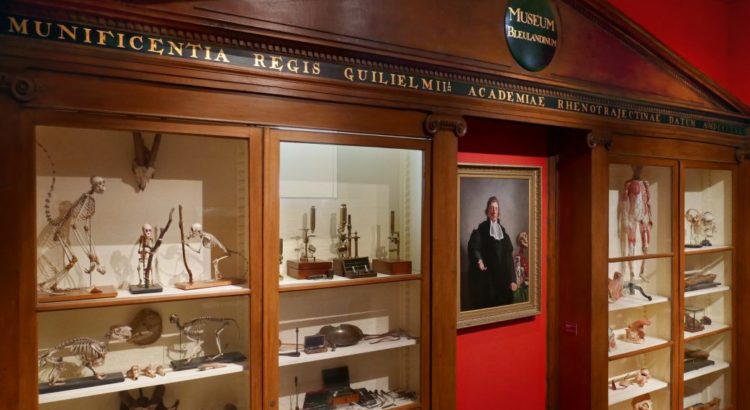
Bleuland’s babies in bottles
“Quiver with horror at skeletons, organs, foetuses and body parts in formaldehyde!” This caption at the website of the Utrecht University Museum refers to the Bleuland Cabinet, home of the private collection of physician Jan Bleuland (1756-1838). Bleuland lived in an age of change. The development of instruments and technics, in which the physician himself […]
Problems and opportunities with online collections
The first example of a digital archive we took from a text we read for this college. it’s the BBC’s WW2 people’s war project. This was a project that ran from June 2003 to January 2006. The aim of the project was to collect on a website the memories of people who had lived and […]
Moving here, but where did I come from?
In this blog post we will be discussing the features that can be used on the Moving Here website of the National Archives of the United Kingdom. Though this site is no longer being updated, it can still be used to view its content. The Moving Here website offers a history of migration of four […]
Folklore.org vs. Reddit – an analysis by Ruudster Wynerink
For the course Special Topics, we had to compare and analyse two different digital projects. We looked into the subject of the websites, what audience was intended, how accessible the website is and the possibilities of contributing. We picked folklore.org, which contains anecdotes about the development of Apple’s original Macintosh, and reddit.com, where all the topics you […]
Different public means different websites: an examination of Vele Handen and the Groninger Archives
According to the chapter of Cohen and Rosenzweig, you must ‘go beyond passive “texts” such as websites and web pages and also think about active processes such as communication and interaction.’ They point out a view criteria with which you should take account if you want to build a digital collecting site. Why collect history […]
Websites to remember
Nowadays, websites are often used to keep in touch with personal memories of a certain historical event. The website of the Jewish monument is an example of this. It has two goals: first to keep alive the remembrance of the Jewish people in the Netherlands, second to make Jewish relatives able to find their roots.[1] […]
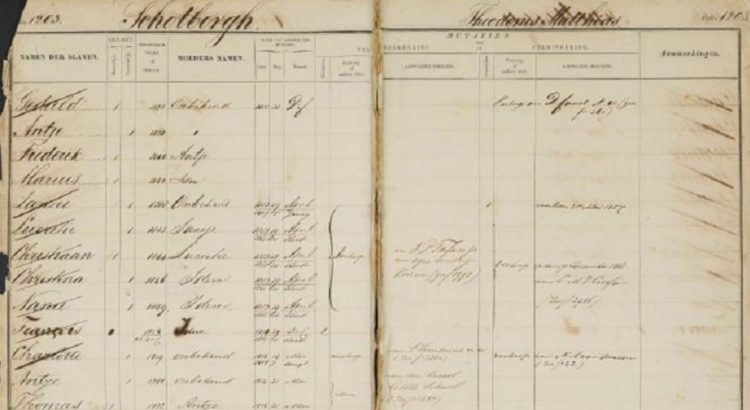
Digital slavery registers: making a dark period more transparent
For many countries it is a black page in history: the history of slavery. Fortunately, there is more and more open discussion and publication about this. The internet is a perfect place for this. In this blogpost we will dive deeper into two slave registers: one of Suriname, one of the former British Colonial Dependencies. It will be […]
Wherewereyou.org and Groeistad.nl: Contributing in 2001 and 2018 a comparison
We looked at two different digital collecting sites, wherewereyou.org and groeistad.nl. These two websites are very different, both in their functionality as the time they were launched. Wherewereyou.org The website wherewereyou.org was started by three undergraduate students without any specific funding. They wanted to collect personal narratives about September 11 from people all around […]